How Water Opens Solid Rock
Limestone seems immutable, but it is one of the most chemically vulnerable stones on our planet. Through karstification, water acts as a patient sculptor, excavating void spaces across epochs.
The Carbonate Equilibrium Equation
Pure water dissolves limestone at negligible rates. The engine of cave formation begins in the soil canopy, where decomposing plant matter produces carbon dioxide levels up to 30 times higher than the atmosphere. As rainwater filters through soil, it reacts to form weak carbonic acid:
CaCO₃ + H₂CO₃ ↔ Ca²⁺ + 2HCO₃⁻
When this acidified solution strikes calcium carbonate (CaCO₃) in limestone bedding planes, it converts insoluble rock into soluble calcium and bicarbonate ions. The stone is carried away invisibly in solution, leaving behind an ever-expanding hollow.
Micro-Fissure Initiation
Tectonic stress cracks rock beds. Seeping moisture moves at laminar velocities below 1 cm per day, etching channels no thicker than a single needle.
Kinetic Breakthrough
Once a conduit widens to approximately 5 to 10 millimetres, water flow shifts from laminar to turbulent. Dissolution rates leap exponentially, and the passage hollows quickly.
Phreatic Cavitation
While submerged beneath the water table, water presses in all directions under hydrostatic pressure, producing circular tube tunnels and smoothed roof pockets.
Vadose Downcutting
As the regional valley deepens, the water table drops. Air enters the cave roof, and free-surface subterranean streams incise keyhole canyons into the stone floor.
Deposition: When Stone Grows Back
Dissolution is only half the life cycle of a cave. Once an open, ventilated chamber is established, the chemical reaction reverses. As mineral-saturated droplets emerge from the cavern ceiling, carbon dioxide degasses from the droplet into the cavern atmosphere. Unable to hold its mineral load, calcium carbonate precipitates out as solid calcite crystals.
 Crystallography
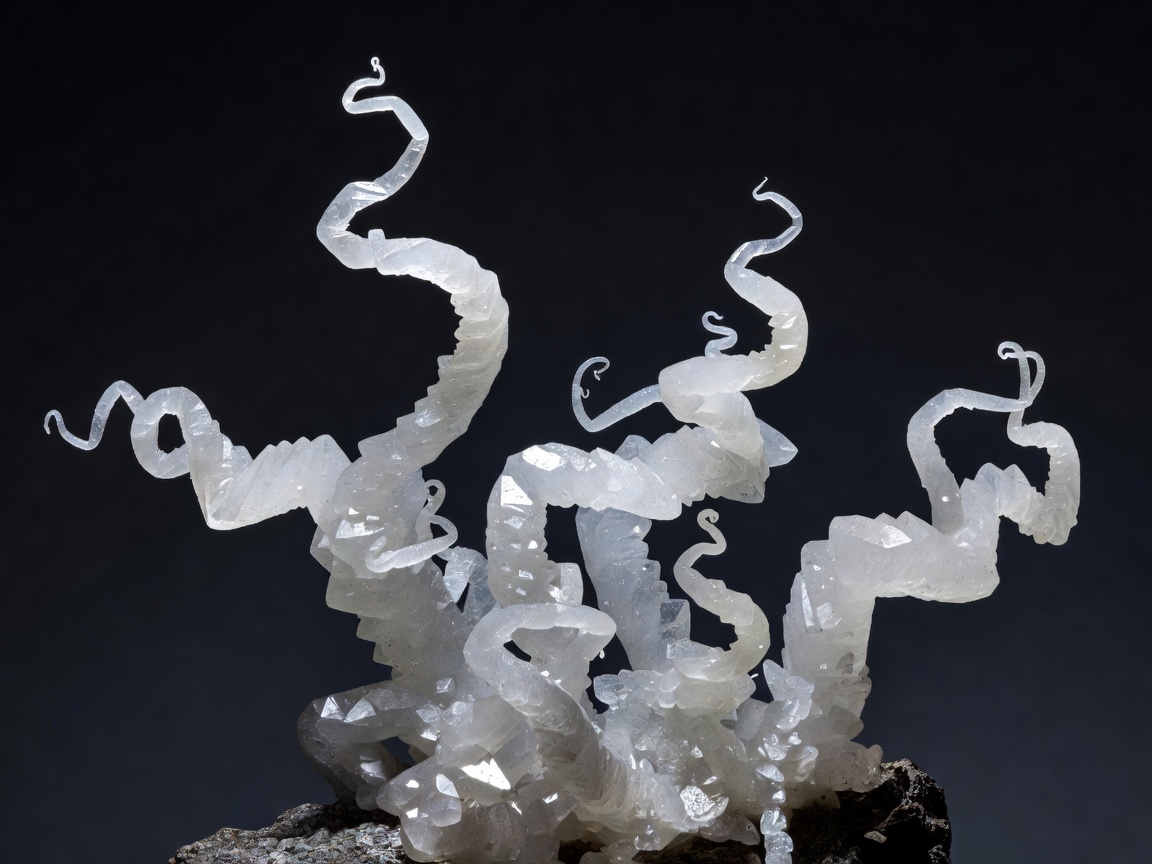
Helictites & Anthodites
These gravity-defying branches curl sideways and upwards. Capillary forces within microscopic internal conduits outweigh gravity, pushing tiny calcite crystals outward in erratic spirals.
 Hydraulic Formations
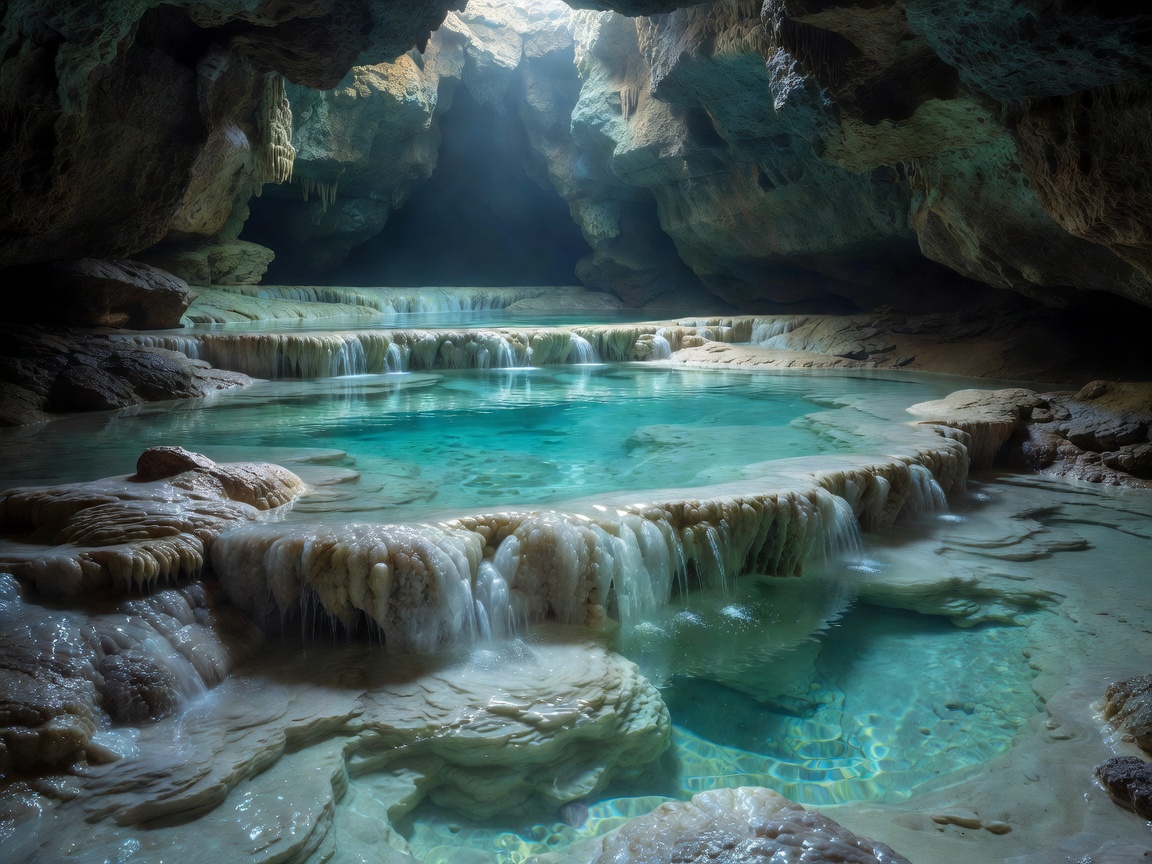
Rimstone Dams (Gours)
Where water spills over shallow barriers, agitation increases CO₂ degassing, depositing calcite preferentially along the lip of the pool. Over time, tiered terraces of dams form natural stairways.
 Epochal Growth
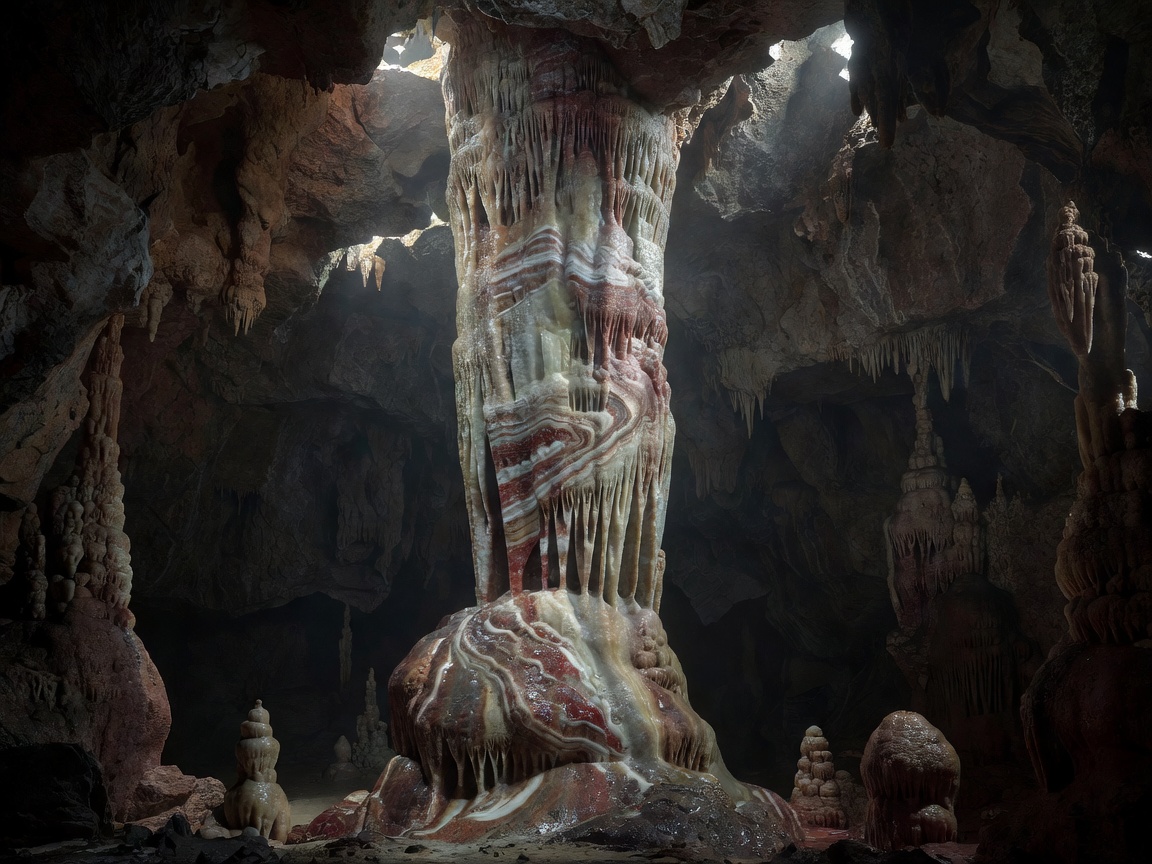
Massive Columns
When a descending stalactite meets an ascending floor stalagmite, they fuse into a continuous pillar. A column three metres thick often embodies between 150,000 and 400,000 years of unbroken seepage.
Speleothems as Paleoclimate Chronometers
Because stalagmites grow incrementally layer by layer, they serve as pristine climate archives. Paleoclimatologists drill tiny core samples and analyse oxygen-18 and carbon-13 isotope ratios, as well as uranium-thorium radiometric decay. These readings reveal historic shifts in surface rainfall, drought periods, and atmospheric temperature reaching back over 500,000 years with seasonal precision.