Speleological Destinations

Caverns with a Story to Follow

Across continents, tectonic forces and subterranean waters have opened monumental chambers. Below is our field catalogue of significant systems where geology, history, and managed conservation intersect.

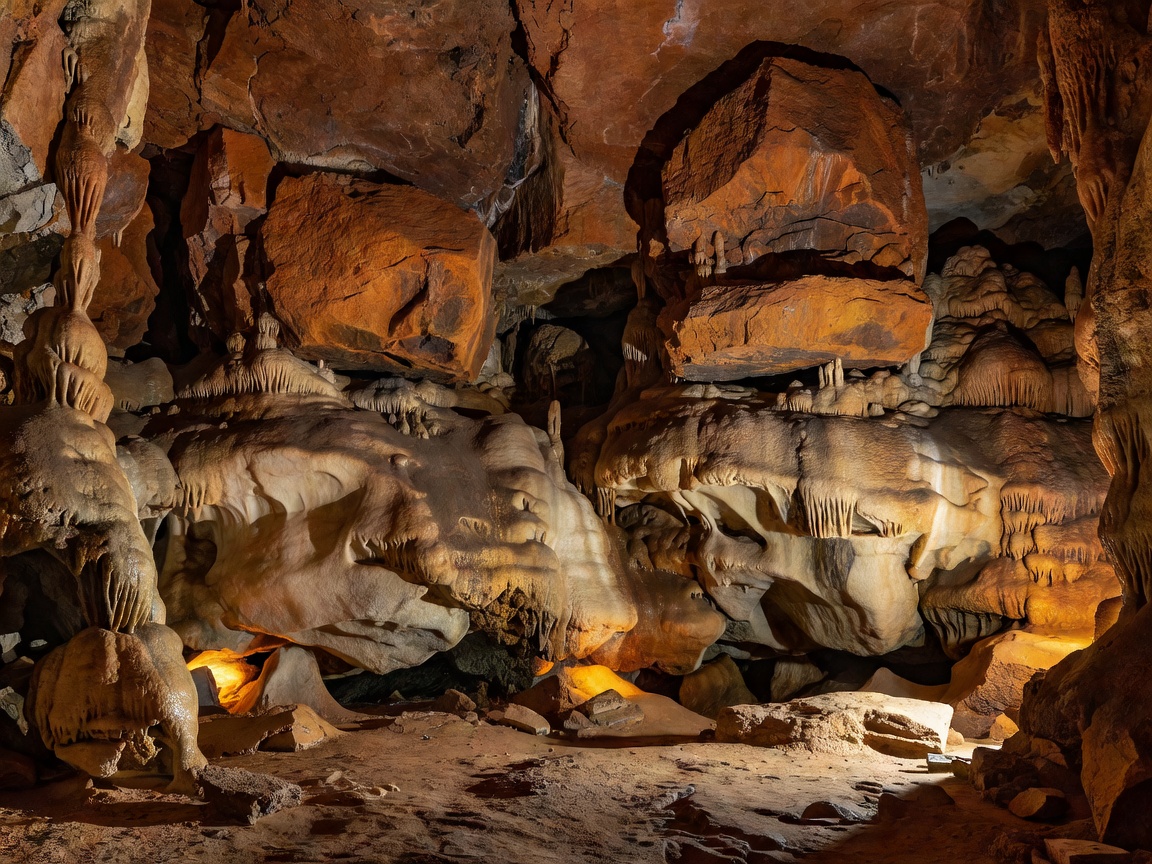
Vast sandstone-capped limestone room inside Mammoth Cave national park United States

Mammoth Cave System (Kentucky)

With more than 686 kilometers of mapped passageways, Mammoth Cave is the most extensive known cave labyrinth on Earth. Its longevity is owed to an impermeable caprock of Big Clifty sandstone that shields underlying Mississippian limestone from rapid surface collapse.

Highlights include the Rotunda, Gothic Avenue's historic signatures, and deep vertical shafts known as bottomless pits. Access is rigorously managed by the National Park Service with ranger-led itineraries.
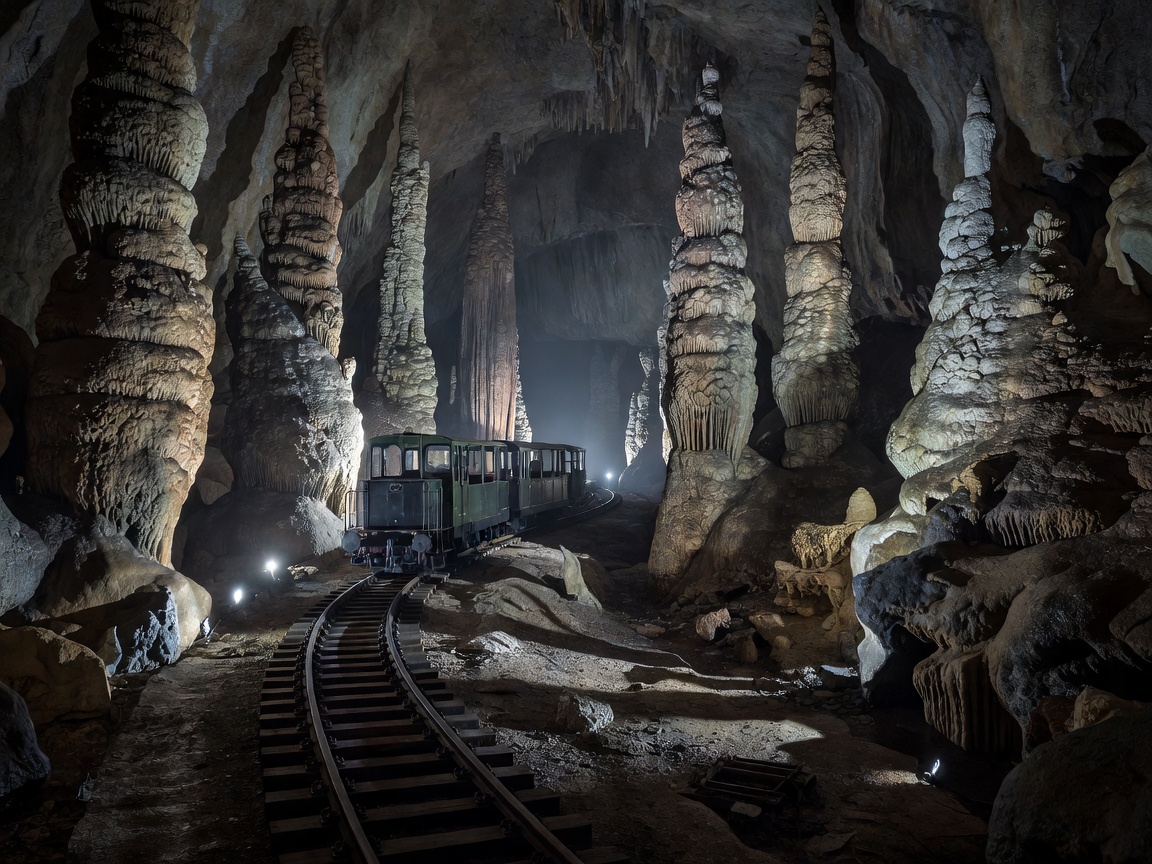
Electric train track running through high stalagmite-filled chambers in Postojna Slovenia

Postojna & Predjama Karst (Notranjska)

Carved by the Pivka River, Postojna Cave spans 24 kilometers of subterranean karst halls. It has hosted visitors since the early 19th century, featuring the world's first underground passenger railway (opened 1872) and rare endemic proteus salamanders (olm).

Nearby, Predjama Castle hangs inside the gaping mouth of a 123-metre cliff, linked directly into secret escape galleries beneath the ramparts.

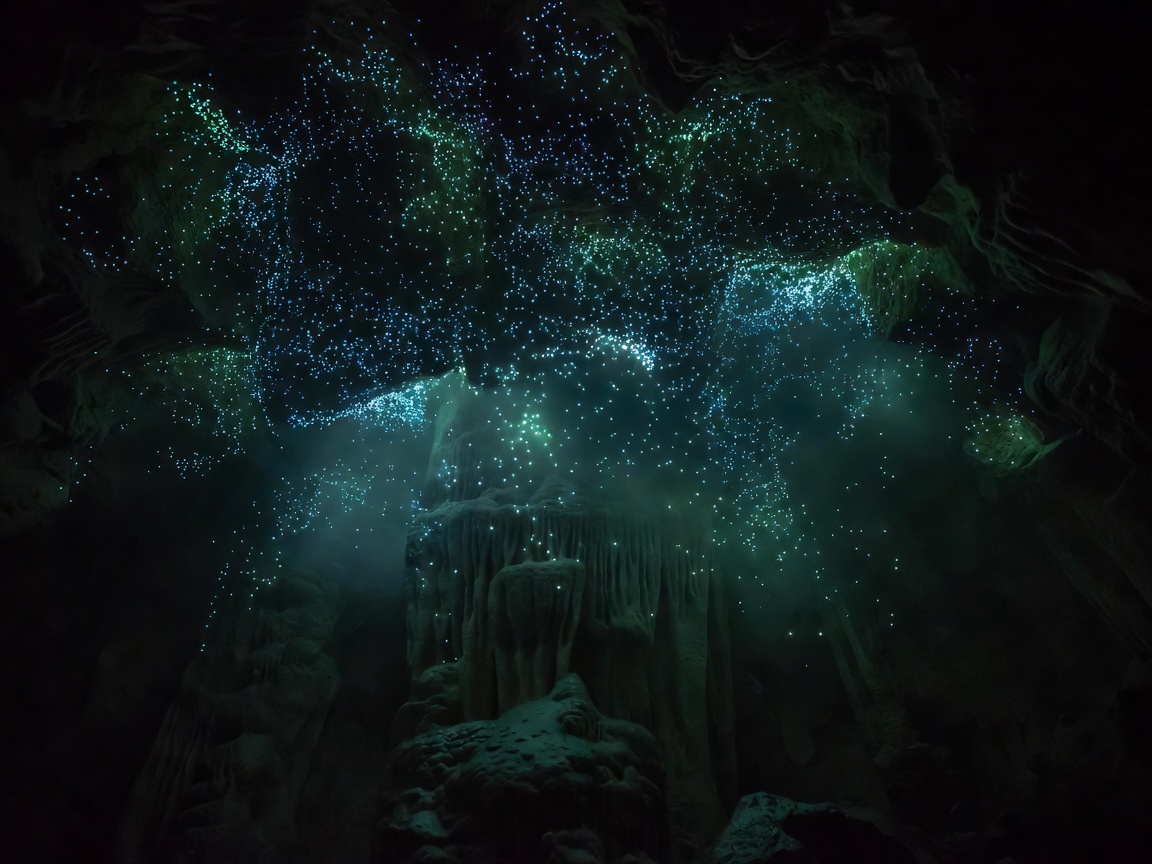
Ceiling of dark cavern lit up with thousand points of blue-green bioluminescent glowworms New Zealand

Waitomo Caves (North Island)

Formed within Oligocene limestone, Waitomo's deep shafts (tomos) and flooded river channels are world-famous for Arachnocampa luminosa, a bioluminescent fungus gnat species unique to New Zealand whose glowing larvae line chamber ceilings like constellations.

Tours navigate the subterranean Waitomo Stream silently on guided wooden punts to protect fragile insect silk fishing lines from air turbulence.

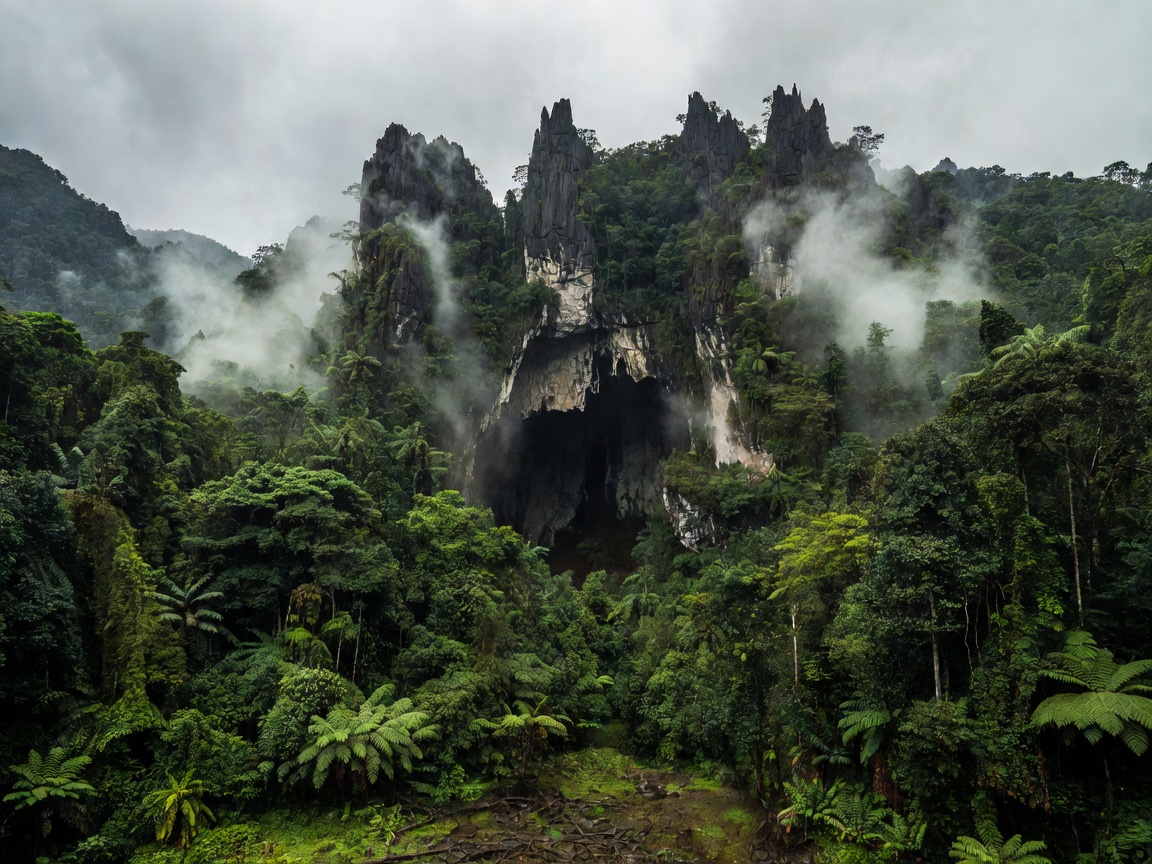
Towering karst pinnacles and rainforest opening leading into massive cavern entrance Borneo, Malaysia

Gunung Mulu National Park (Sarawak)

Mulu holds two global records: Deer Cave possesses one of the largest single cave passages capable of sheltering cathedrals, while Sarawak Chamber spans an uninterrupted floor area exceeding 160,000 square metres.

Every dusk, millions of wrinkle-lipped bats emerge from Deer Cave in oscillating airborne spirals, feeding across the surrounding primary rainforest canopy.

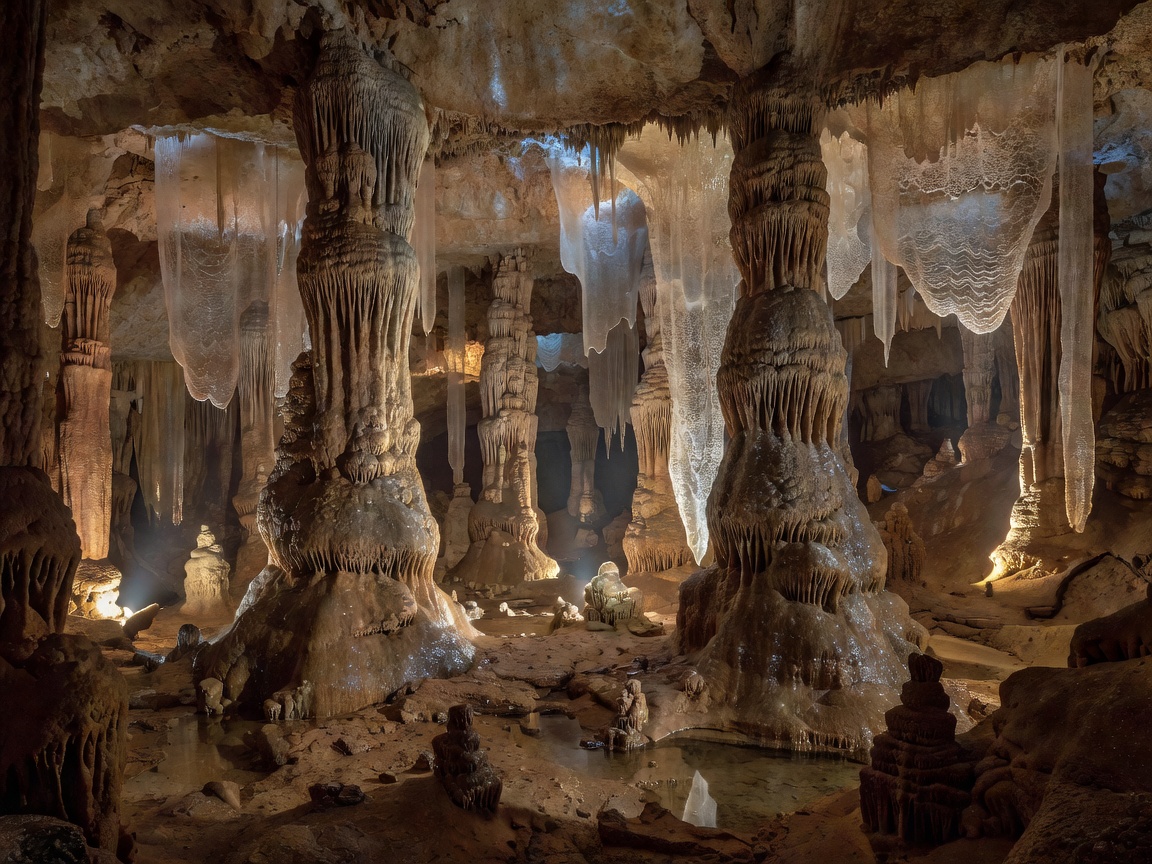
Spacious cavern hall filled with monumental columns and delicate draperies United States

Carlsbad Caverns & Guadalupe Mts (New Mexico)

Unlike most caves carved by descending rainwater, Carlsbad was hollowed from the bottom up by sulfuric acid speleogenesis. Hydrogen sulfide gas migrating from Permian petroleum basins dissolved huge cavities like the Big Room (covering 3.3 hectares).

A natural walk-in switchback route drops 230 metres into cool, mineralized silence beneath the Chihuahuan Desert.

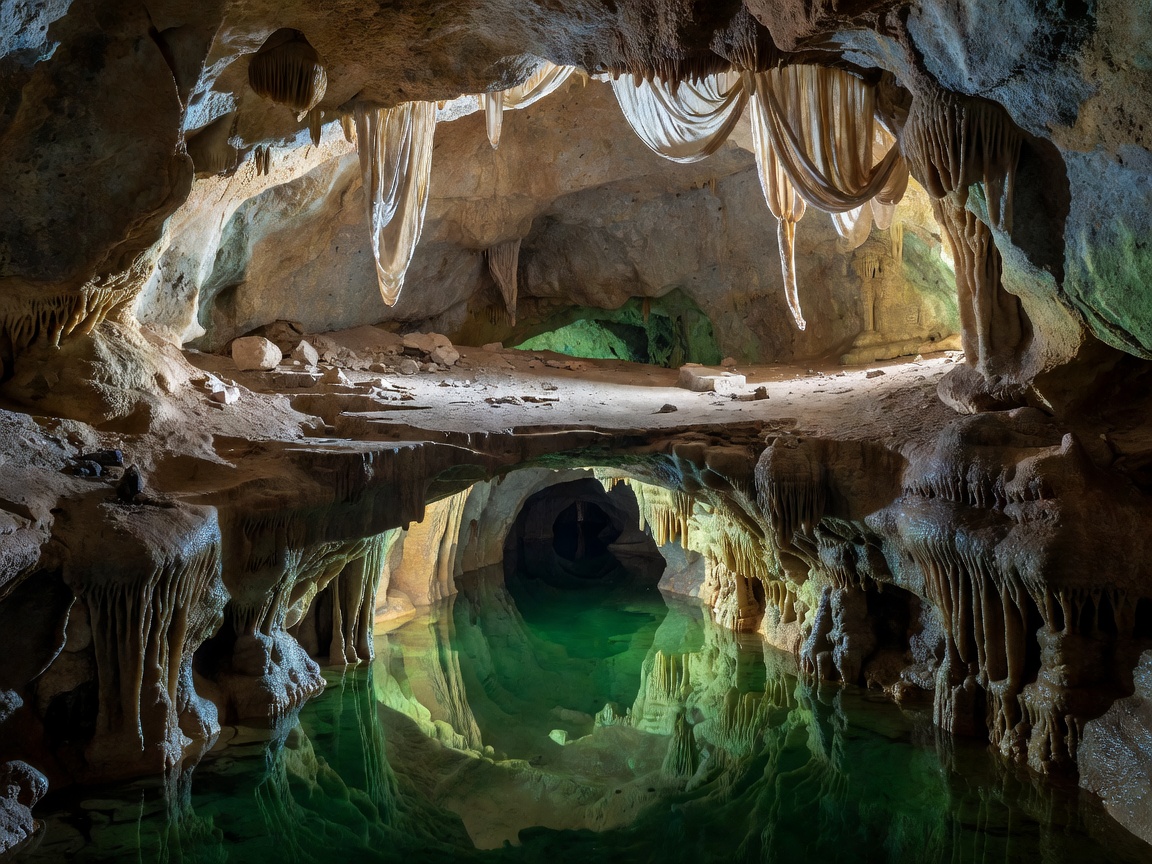
Two-tier cave complex featuring an upper dry gallery and an emerald subterranean canal Lebanon

Jeita Grotto (Nahr al-Kalb Valley)

Composed of two interconnected limestone chambers with an aggregate length of nearly 9 kilometers, Jeita supplies fresh drinking water to over a million residents in Beirut. The upper dry gallery houses one of the world's longest known stalactites (8.2 metres).

Strict noise restrictions and boat excursions prevent carbon accumulation and acoustic reverberation damage within the lower river passage.

Field Protocol for Visiting Historic Show Caves

Commercialization has preserved many of these delicate spaces by consolidating human traffic onto elevated gangways and installing cool, non-photosynthetic lighting systems that prevent algae growth (lampenflora). When selecting a cave excursion:

  • Verify that your tour group size is capped to avoid elevated CO₂ and moisture loads that destabilize dry mineral surfaces.
  • Wear closed-toe, high-traction boots with non-marking rubber outsoles suited for slippery wet limestone.
  • Honor flash photography prohibitions; high-output strobes can disrupt sensitive subterranean fauna and accelerate phototrophic colonization.